

Why Choosing the Right Supermarket Shelf Matters
Making the right choice among a variety of supermarket shelf is not just practical but also plays a very important role in success for your retail environment. Proper shelving not only adds to the overall organization of the store but has a very direct effect on product visibility and thus boosts up sales.
The convenience and clarity in which goods are presented give customers easy access to find what they need to buy. Supermarket shelves placed at strategic positions ensure smooth navigation of the store with ease, therefore creating a smoother experience for customers. Such organization will ensure that customers go down more aisles, hence more engagement, translating to increased impulse buys.
In addition, partnering with a supermarket shelf manufacturer who understands the dynamics of retail space means that your shelves will be strong, adjustable, and adaptable to changes in product line. The right shelving configuration will be able to optimize space usage in such a way that you can display a wide range of products while maintaining a clean and organized look that complements your brand image.
Different Types of Supermarket Shelves

When you choose the right supermarket shelf for your store, understanding various types helps optimize your space and allow maximum visibility to products. Five common types of supermarket shelves, each with their special purpose to enhance store layout and customer experiences, are as follows:
1. Gondola Shelving
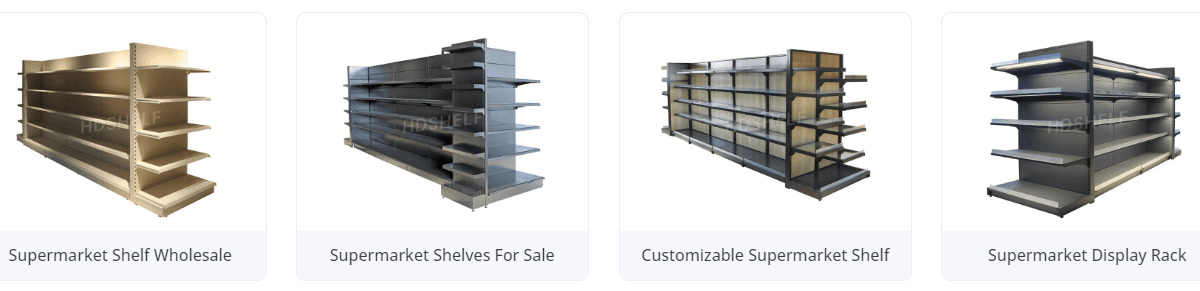
Gondola shelves form the backbone of most retail stores. These freestanding units are versatile and suitable for showcasing various types of products, thus being ideal for most product categories. When centrally placed, they form aisles and provide easy access for customers on both sides. The adjustable shelves further possess the added advantage of flexibility for the retailer to rearrange products at will. These types of shelves are in high demand because of their practicality, ease of self-assembly, and the ability to accommodate quite a significant amount of merchandise in the best way possible.
2. Wall-Mounted Shelves
They save space because they make use of the vertical space of your store. They are good for the display of heavier items, as the design is sturdy enough to carry more weight compared to the free-standing shelves. They are perfect in creating a neat and organized look, leaving the floor space of the store free. In those supermarkets where floor area is limited, they maximize every available inch in the store to keep products accessible yet not cluttered.
3. End Cap Shelves
The end cap shelves are those that can be found at the head or the end of an aisle. These have been deemed very powerful and effective impulse purchase drivers. Commonly, they would carry items for promotions or seasonal items; their presence would immediately catch the eye of customers since they would be among the first things one would notice while passing. Such could show high-margin items or new arrivals since they are highly noticeable, thus making them perfect for retailers looking to boost sales through strategic product placement. End cap displays are often one of the important rings in the chain of promotional activities of a supermarket.
4. Island Shelves
Island shelves are also very versatile; they can be put anywhere in the store because they are free-standing displays, allowing flexibility with the location of the product. They are ideal for product promotion since customers can view products from all sides. Island shelves are used very much by retailers for the display of high-demand items, as well as seasonal ones, needing maximum visual exposure. Their stand-alone capability makes them effective drivers of customer interaction and enhances their shopping experience.
5. Custom Shelving Options
Apart from the standard variant of shelving, one can have custom shelving designed to meet particular store requirements. For instance, fresh produce requires well-ventilated and sturdy shelves to maintain freshness, whereas bulk goods need larger and sturdier shelves to bear their weight. Custom shelving ensures your store layout is suitable for the nature of your product range, which helps you create a more functional and organized environment.
Materials and Aesthetic Choices for Supermarket Shelving
The material and aesthetic of your supermarket shelf can make a great difference in the outlook of the store and its functionality. Therefore, here is the breakdown of most common shelving materials along with their pros and cons to help you get the best fit for your store.
1. Metal Shelving
It is tough and very economical; therefore, it finds wide usage in supermarkets. Metal shelves can have different structures depending on their function but usually are made of steel or aluminum. They are resistant to heavy loads and wear and tear; therefore, they can be applied for highly loaded stores with intensive customer and stock traffic. They are pretty easy to clean and maintain. Their industrial look also looks sleek and good enough for any retail outlet.
Further, metal shelves can be treated with a myriad of finishes to comply with the design of the store. Whether bright-colored powder-coated or left in polished metallic finish, metal shelving provides for versatility while guaranteeing long-term use.
2. Wood Shelving
Wooden shelving will do the work for those retailers wanting to create a more premium or natural touch within their store. The presentation of wooden shelves-both made from solid wood and its composites-adds more warmth and sophistication to the shopping experience, especially for specialty or organic lines of products. They are very ideal for those stores aiming to reflect an upscale or earth-friendly brands.
Yet, the problem with wood is that the shelves require more maintenance compared to their metal cousins. Furthermore, they can be prone to damage due to moisture or heavy usage, hence requiring constant upkeep. Still, aesthetic appeal for display and the inviting ambiance that the wood shelving have makes the little extra effort in maintaining them quite worth the while, especially for stores that have a niche or boutique appeal.
3. Glass Shelving
Glass shelving is perfect for high-of-the-line or specialty stores. With their modern and rich look, the shelves are perfect for displaying high-end merchandise or to create sleek display lines with minimum display accents. Glass shelves are mainly used in high-class supermarkets or areas intended to show products having high margins. This allows for better product visibility and also gives the store a clean and polished appearance.
While the glass shelving looks real elegant, it is less practical for high-traffic areas, as it requires much cleaning to keep its clarity and is more breakable than metal or wood. All the same, for those stores where it is vital to show something beautifully, glass shelving cannot be outshone in its level of sophistication.
Factors to Consider Based on Store Size
Store size can have a significant influence on the layout of your space, the type of shelving, and overall organization. Each store size has different needs when it comes to maximum showing of a product for the comfort of shoppers. Here is how you can select the best shelving solution based on the size of the store:
- Small Stores: Optimize for Compact Shelving and Vertical Space
In small stores, space is at a premium, and hence full utilization of every square inch becomes necessary. For such stores, compact shelving that maximizes vertical space becomes quite essential. You can install taller shelves to stack products without occupying much floor space, allowing room for aisles and mobility. Both wall-mounted shelves or slender gondola shelving units should be great for a small store. They will give an ample display of products without cluttering the store layout. The shelves should also be kept adjustable so that one may easily modify the layout in accordance with changing inventories.
- Medium Stores: Balance Between Product Variety and Spaciousness
The medium-sized stores give room for shelving, but a thin line exists between the provision of a wide range of products and leaving space enough to comfortably shop. The manufacturers of the supermarket shelves do usually recommend gondola shelving with height adjustments to accommodate different product types and leave the aisles wide enough to easily handle the customer flow. For medium stores, the shelves should be placed at strategic positions to guide the customers through space while promoting higher-margin products with end-cap displays or island shelves.
- Large Stores: Use Gondola Shelving to Maximize Product Exposure
In large stores, exposure is very important when it comes to products. Gondola shelving is going to be ideal in creating aisles, organizing the products into categories, and letting one’s customers browse through both sides of the shelves easily. With this extra space, large stores are in a position to install longer display shelves to hold a greater quantity of products so that high-demand items are always in stock. Large stores should also conduct end cap displays for seasonal or promotional items to ensure impulse purchases while customers move down the aisles. The versatility of gondola shelving makes it ideal for big areas where many different products have to be shown efficiently.
Choosing Shelves Based on Product Type
Your choice for the right supermarket shelf depends on the type of product you want to display in your store. This is because different products have distinct requirements when it comes to storage. Using the right shelves will ensure that they are correctly displayed, hence being viewed and accessed by all your clients. Here is the guide on the best shelving options according to the products on display.
- Perishables: Sturdy and Ventilated Shelves for Fresh Produce, Dairy, and Meats
Shelves employed in perishable products like fresh produce, dairy, and meats should be strong but well-ventilated. Well-designed shelving helps in holding the weight and also assists in ventilation to maintain freshness. Wire shelving or perforated metal shelves are excellent options as they prevent moisture from building up and maintain conditions ideal for the goods. Some products are temperature-sensitive and therefore will require refrigerated shelving units.
- Bulk Items: Use Pallet Racking or Deep Shelves for Larger Products
For bulk items, such as large packages of food or household products, heavy-duty shelving is necessary. These kinds of products are best suited for pallet racking or deep shelves since they provide support for heavier weights and larger dimensions. These shelves can also be adjusted to hold a variety of sizes, furthering their flexibility within a wide range of products. Bulk items tend to be relegated to warehouse-style areas of the store. These types of shelves assist in maximizing storage while still keeping products accessible to customers.
- Impulse Buys: End Cap and Checkout Aisle Displays for Small, Quick-Purchase Items
End cap displays and checkout aisle shelving work quite well for impulse buys such as snacks, magazines, or other small convenience items. For reaching customers at high-traffic points, shelving is strategically placed to encourage last-minute purchases. End caps also work very well for seasonal or sale items. Checkout aisle shelving should be compact, yet visible, so that the customer waiting in line can easily scan small high-margin items.